

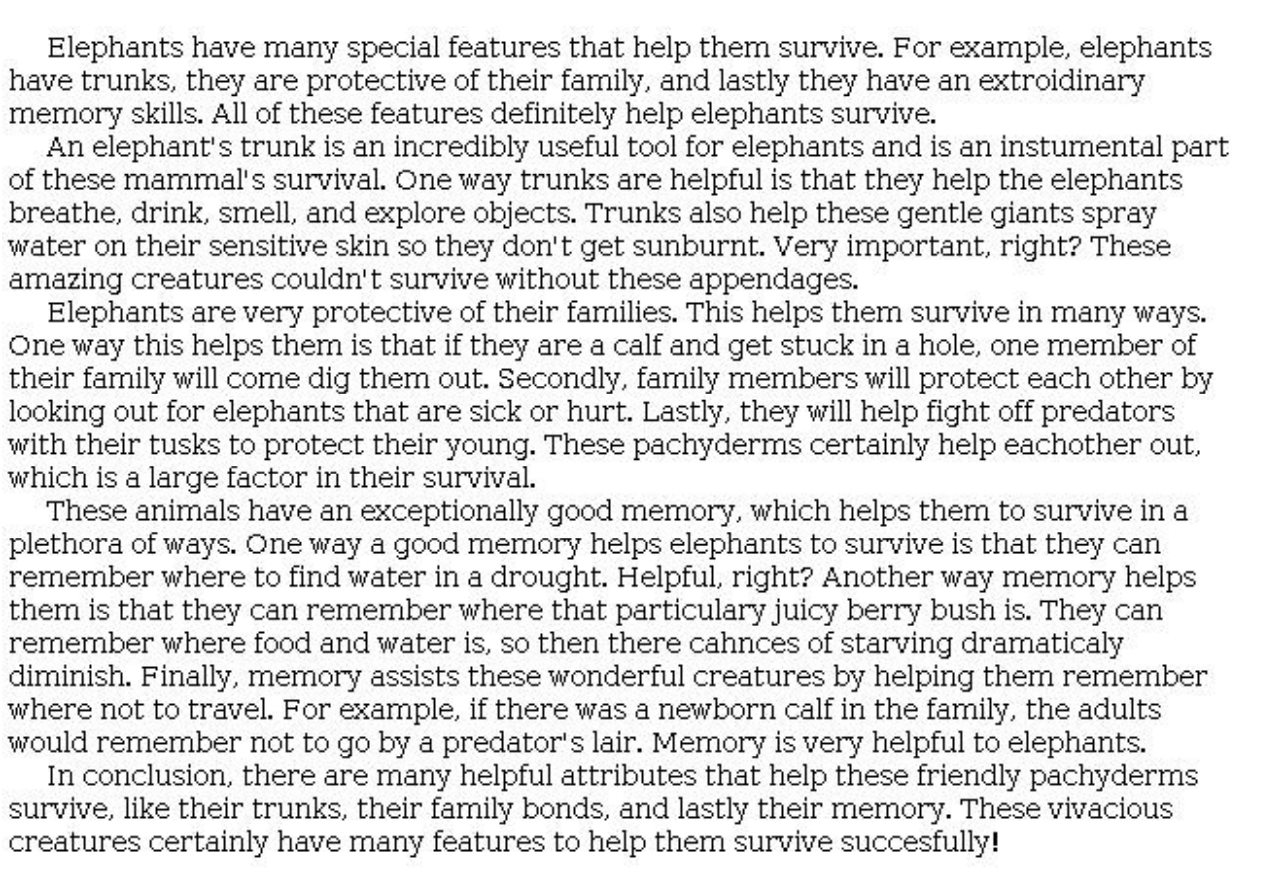
Topic: Elephant’s special features for survival
Main Idea #1: trunks
Main Idea #2: protective of family
Main Idea #3: memory
What Works:
- Organization: The student wrote a full essay that includes an introduction, several distinct main idea paragraphs and a conclusion. Additionally, there are transitions that move the reader from one idea to the next.
- Textual Evidence/Elaboration: Each paragraph includes evidence that is paraphrased directly from the text. The author chose the evidence and included the explanation of why this evidence is important. A skillful use of the detail generating questions, “What does it look like? And Why is it important?” “What does it look like when an elephant uses a feature and why is that important to the elephant’s survival?”
- Paragraph 2: "One way trunks are helpful is that they help the elephants breathe, drink, smell, and explore objects. Trunks also help these gentle giants spray water on their sensitive skin so they don't get sunburnt."
- Paragraph 4: “They can remember where food and water is, so then there chances of starving dramatically diminish.”
- Powerful Vocabulary: The use of “word referents” to refer to the elephant raises the level of this response. The author uses word referents throughout the response: gentle giant, amazing creature, mammal, friendly pachyderm, and vivacious creatures.
- Introduction and Conclusion Paragraphs: The author introduces the topic and adds a topic sentence that includes the main ideas in the introduction paragraph. The conclusion reiterates the main ideas and adds a definitive word along with a general restatement of the topic, “These vivacious creatures certainly have many features to help them survive successfully!”
Feedback with Prescriptive Lesson - Focus Skill
Transitions: The student would benefit from lessons on developing smooth transitions between sentences versus the simple transitions, “first, next, lastly.”
- Informational Skills: Section 3 Lesson 11: Transitional Words and Phrases
Citing Evidence: Each piece of evidence in this response is paraphrased, however evidence can also be cited directly to improve the writing.
- Informational Skills: Section 2 Lesson 12: Giving the Author Credit
Author’s Group Revision Model
To teach revision, use a whole class model. Project the sample for revision and discuss the strengths and weaknesses of the piece. Choose one skill that will address the weakness and with student participation, go through the revision process. This allows students to see revision in action and provides a structure for their own revision process. Using the suggested feedback from above, here is an example of a revised version of this piece.
What Next?
For more information on Constructed Response, consider joining our training team for a comprehensive professional course that will outline the steps for teaching constructed response, both short and extended. Click this link to register.