

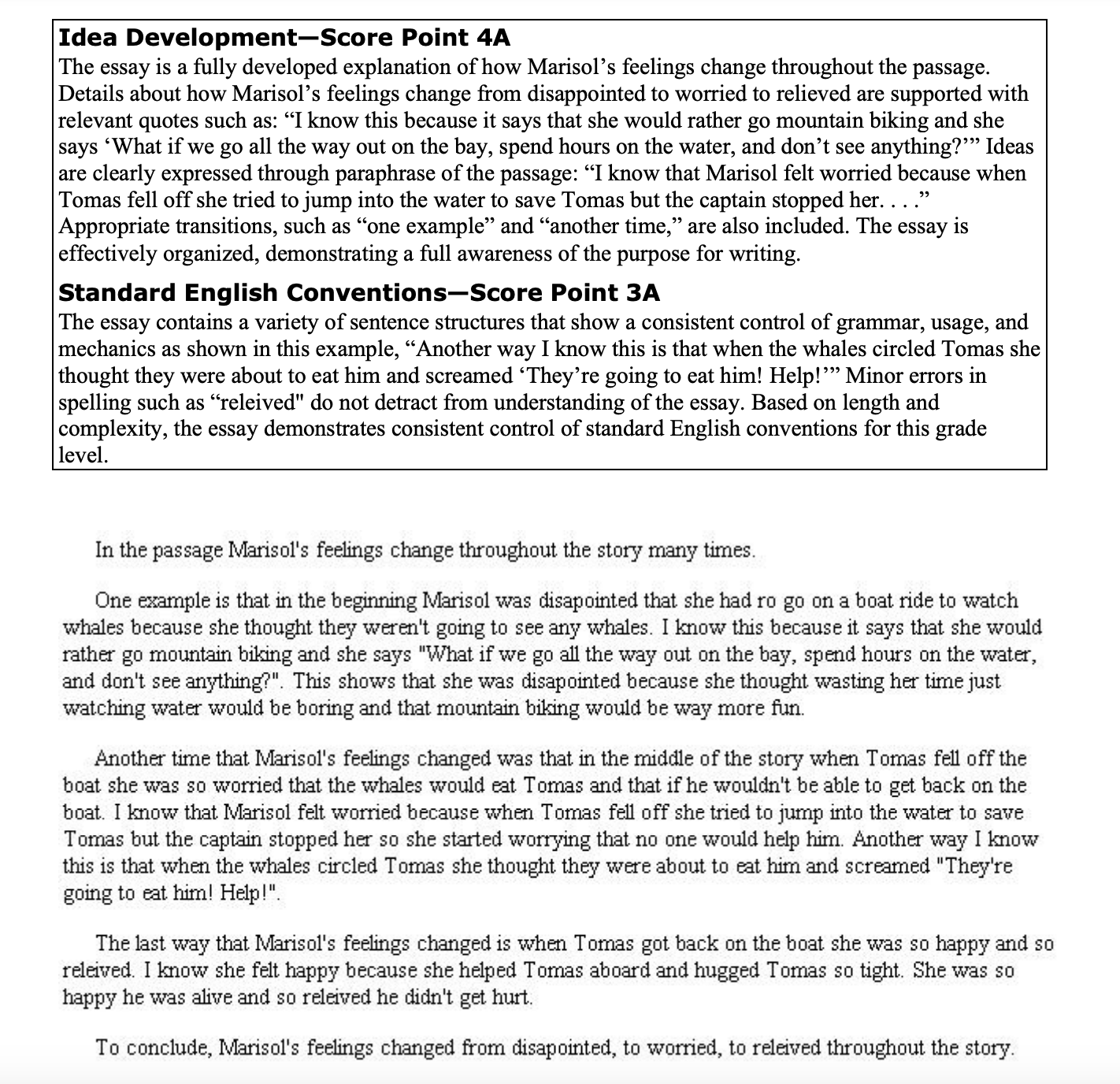
Topic: How Marisol’s feelings change
Main Idea #1: disappointed
Main Idea #2: worried
Main Idea #3: happy/relieved
What Works:
- Organization: The student understands the structure of a literary analysis essay with an introduction, several body paragraphs and a conclusion. Simple transitional language is included as the reader moves from one paragraph to the next.
- Textual Evidence: The student supplied details from the text in each paragraph either directly cited or paraphrased.
- Elaboration: The author was able to include elaboration through the use of the detail generating questions - What does it look like? And Why is it important? The detail generating questions provide a frame for locating specific evidence and explaining that evidence.
- What do feelings look like? “ …Marisol was disappointed…I know this because it says that she would rather go mountain biking and she says “What if we go all the way out on the bay, spend hours on the water, and don’t see anything.” Why is it important? “This shows that she was disappointed because she thought wasting her time just watching water would be boring and that mountain biking would be much more fun.”
- In paragraph 3 the author paraphrases the passage, “...in the middle of the story when Tomas fell off the boat she was so worried that the whales would eat Tomas and that if he wouldn’t be able to get back in the boat. …she tried to jump into the water to save Tomas…” What does it look like to be worried? Why is it important?
Feedback with Prescriptive Lesson - Focus Skill
Main Ideas/Reasons: The student would benefit from lessons on developing main ideas sentences that are creative and adding additional high level vocabulary.
- Informational Skills: Section 1 Lesson 10 Alternatives to Boring, Redundant Main Idea Sentences
- Informational Skills: Section 1 Lesson 11: Revising Boring, Redundant Main Idea Sentences
- Informational Skills: Section 1 Lesson 15 Word Referents
Elaboration:
Additional practice with citing and paraphrasing would also be helpful to enhance this response.
- Informational Skills: Section 2 Elaboration: Lesson 15 Paraphrasing
- Informational Skills: Section 2 Elaboration: Lesson 16 Giving the Author Credit
Author’s Group Revision Model
To teach revision, use a whole class model. Project the sample for revision and discuss the strengths and weaknesses of the piece. Choose one skill that will address the weakness and with student participation, go through the revision process. This allows students to see revision in action and provides a structure for their own revision process. Using the suggested feedback from above, here is an example of a revised version of this piece. (NOTE: the typos mirror the student sample.)
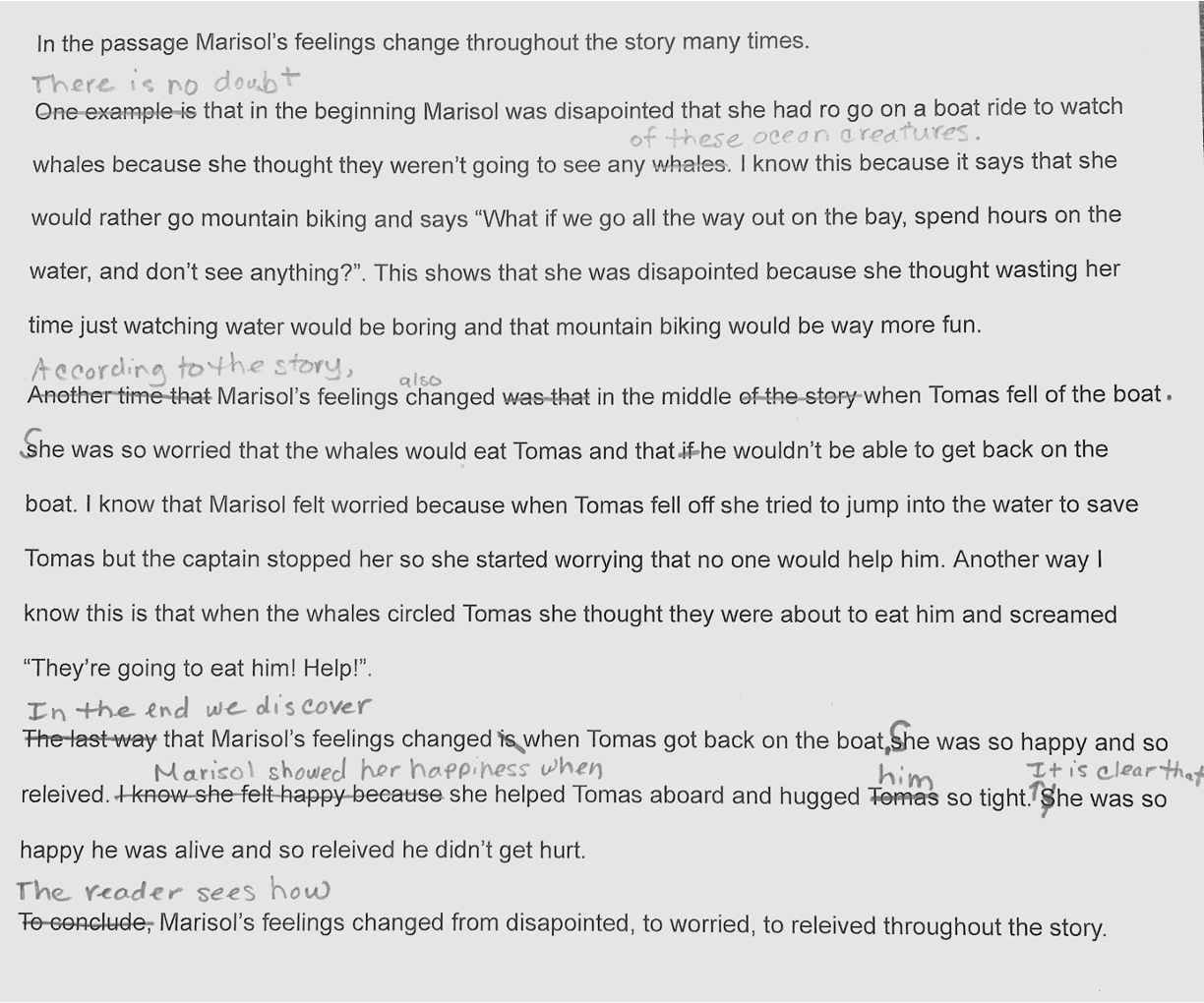
Sentence starters for each main idea paragraph and a word referent for “whale” elevates this sample.
What Next?
For more information on Constructed Response, consider joining our training team for a comprehensive professional course that will outline the steps for teaching constructed response, both short and extended. Click this link to register.